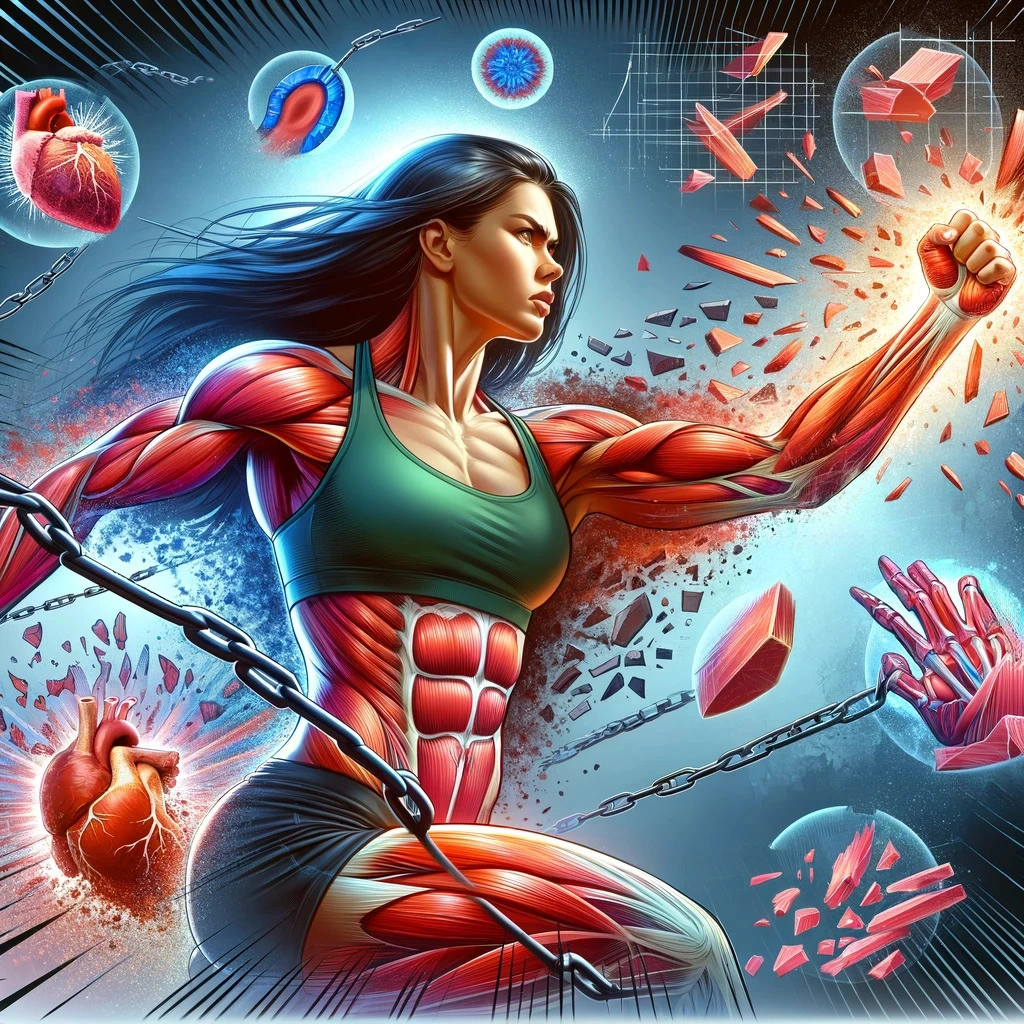
In the dance of life, our bodies constantly sway between breakdown and rebuilding, governed by the catabolic and anabolic states. This dynamic is not just about building muscles or burning fat. It’s a reflection of the fundamental laws of hormesis and homeostasis. Here’s how it works: hormesis triggers action, leading to the catabolic state where waste is produced, while homeostasis brings rest, ushering in the anabolic state for restoration and waste disposal.
Catabolic State: The Hormesis Action Connection
Hormesis, a biological phenomenon where a beneficial effect results from exposure to moderate doses of an agent that is otherwise toxic at higher doses, parallels the catabolic state. During catabolism, the body breaks down molecules, releasing energy and creating waste products. This process is akin to hormetic stress—like exercise or fasting—that stimulates the body’s adaptive responses, leading to improved strength and endurance. For example, during high-intensity exercise, muscles are subjected to stress, resulting in microscopic tears. This damage, however, triggers the body’s repair processes, leading to stronger muscles.
Anabolic State: The Homeostasis Rest Paradigm
Homeostasis, the body’s attempt to maintain a constant internal environment, aligns with the anabolic state, where restoration and waste disposal occur. After the active, waste-producing catabolic phase, the body enters an anabolic state, repairing tissues and clearing out the byproducts of catabolism. This shift from breakdown to rebuilding is essential for recovery and health, embodying the principle of homeostasis. Nutrients consumed are used to synthesize new proteins, heal tissues, and remove cellular debris, ensuring the body remains in balance.
The Hormonal Bridge: Cortisol and Testosterone

Hormones like cortisol and testosterone play pivotal roles in these states. Cortisol, often labeled as the stress hormone, spikes during catabolic activities, facilitating the breakdown of substances to release energy. Conversely, testosterone promotes anabolic processes, aiding in muscle repair and growth. Managing these hormonal levels through lifestyle choices like nutrition, exercise, and rest can optimize the balance between catabolic and anabolic states, enhancing overall health and recovery.
Optimizing the Balance: Nutrition, Exercise, and Rest
To harmonize the catabolic and anabolic states, nutrition, exercise, and rest are key. High-quality protein supports muscle repair, antioxidants combat exercise-induced oxidative stress, and adequate rest and recovery time ensure the anabolic processes can do their restorative work. This balance isn’t just good practice; it’s a necessity for harnessing the full potential of our body’s natural cycles.
In summary
Understanding the catabolic and anabolic states sheds light on the broader principles of hormesis and homeostasis. It’s a testament to the body’s remarkable ability to balance breakdown and rebuilding, ensuring we can thrive amid life’s stresses and recoveries.
Sources
HORMESIS: A Fundamental Concept with Widespread Biological and Biomedical Applications